Tunisian couscous with fish: the distinct flavors of the Mediterranean
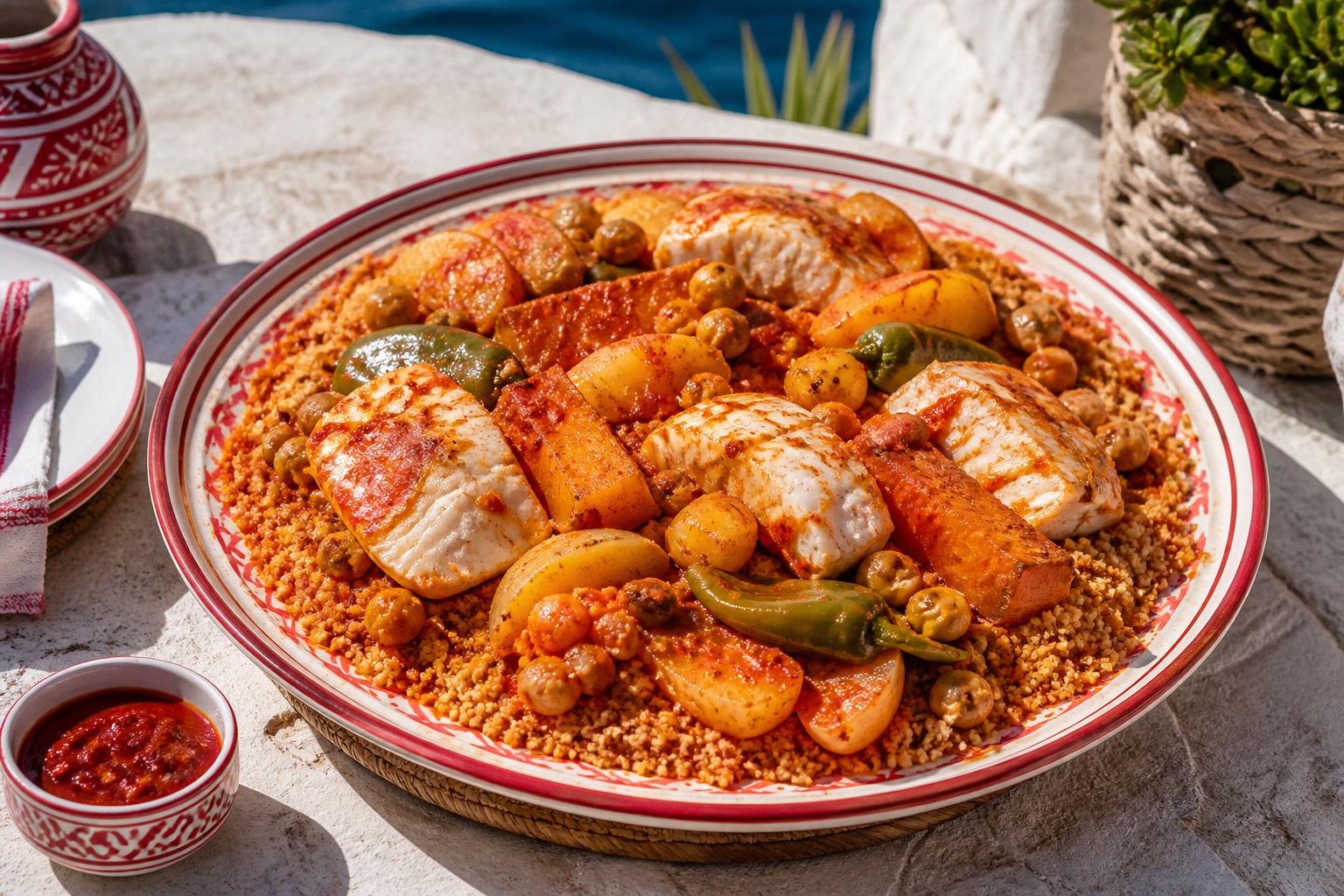
On the Tunisian coasts, fish couscous brings together the sea and the scents of the North African pantry. A firm-fleshed white fish is carefully cooked in a broth of tomato, garlic, cumin, caraway and harissa. The potatoes, pumpkin, peppers and chickpeas make the dish generous while absorbing this lively red sauce.
Couscous has been circulating for centuries around the Mediterranean basin, but each territory gives it its own character. In Tunisia, tomatoes, peppers and harissa often bring a more assertive color and heat. These practices are part of the shared heritage of couscous, recognized by UNESCO in 2020 for its transmission, conviviality and artisanal gestures.
Choose grouper, porgy, thick cod or any other local species with firm flesh. A short marinade with lemon, garlic and spices flavors the fish without weakening it. Cooking is done at the end of preparation: the fish must remain pearly and come off in large petals, never crumbling in the broth.
The semolina is moistened with a little sauce before serving, which gives it its characteristic coppery hue. Dose the harissa according to its strength and present more at the table. This Tunisian couscous must be spicy, fragrant and bright, with a nice balance between the acidity of the tomato, the sweetness of the pumpkin and the freshness of the fish.
Ingredients for 8 people
- 600 g Medium non-precooked couscous
- 1200 g Firm white fish — in large portions
- 500 g Potato — peeled and cut into quarters
- 350 g Pumpkin — in large pieces
- 2 Green pepper — seeded
- 250 g Cooked chickpeas
- 2 Onion — chopped
- 60 g Tomato paste
- 30 g Harissa — to adjust according to its strength
- 4 Garlic — crushed pods
- 60 ml Olive oil
- 1 Lemon — juice and zest
- 1 tsp Ground cumin
- 1 tsp Ground coriander
- 0.5 tsp Ground caraway
- 1 tsp Sweet paprika
- 12 g Fine salt — to adjust
- 0.5 tsp Black pepper — ground
- 1500 ml Hot water
Preserve the fish and balance the spiciness
- Firm fish: choose thick pieces that can withstand gentle cooking.
- Progressive harissa: start with a small quantity and adjust the broth after dilution.
- Short cooking : add the fish at the end and avoid stirring with a spoon.
- Colored semolina: add just enough filtered broth to flavor the grains without making them soggy.
Choosing Fish and Mastering Harissa
The best fish for this couscous has thick and firm flesh. Grouper, porgy or a large piece of cod tolerate poaching well. Avoid fillets that are too thin, which will break in the sauce. Ask the fishmonger for portions of comparable size so that they cook at the same rate. The marinade should be short: the lemon flavors the flesh, but prolonged exposure to acidity would begin to firm it up like in ceviche.
The potency of harissa varies greatly depending on brands and homemade preparations. Start with half the quantity, dilute it with the tomato paste and taste the broth after fifteen minutes. You can then add the rest. Cumin, coriander and caraway give the dish its aromatic relief; they should not be burned in oil. Cooking for two or three minutes over medium heat is sufficient before adding the water.
Cooking, accompaniments and storage
When the fish enters the sauce, the broth should simmer gently and not boil at full boil. No longer stir with a spoon: instead rotate the pot slightly if necessary. Remove the portions as soon as they are cooked and keep them covered while you finish the semolina. This precaution guarantees soft fish that remains whole when served.
Serve with lemon wedges, a cup of harissa and, if desired, grilled peppers. For a less spicy version for the whole family, reduce the harissa in the pot and let everyone add some to their plate. The pumpkin can be replaced with butternut squash, and the green peppers with sweet peppers.
Frequently asked questions
Can we use frozen fish? Yes, as long as you defrost it completely and pat it dry. Why color the semolina with the broth? This gives it the flavor of tomato and spices, characteristic of Tunisian couscous. How to store leftovers? Refrigerate fish separately and preferably eat it the next day. The semolina and broth will keep for two days in airtight containers.