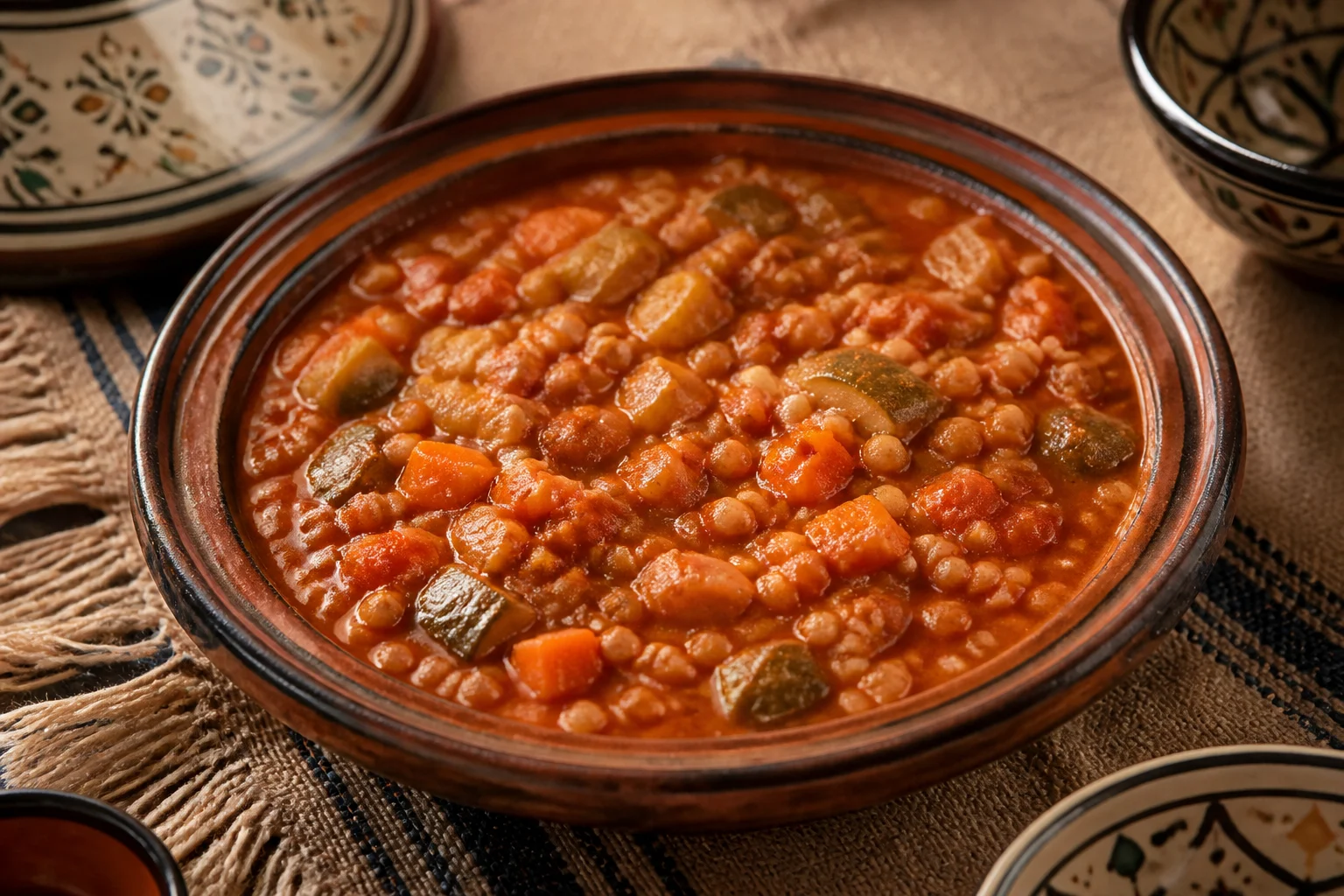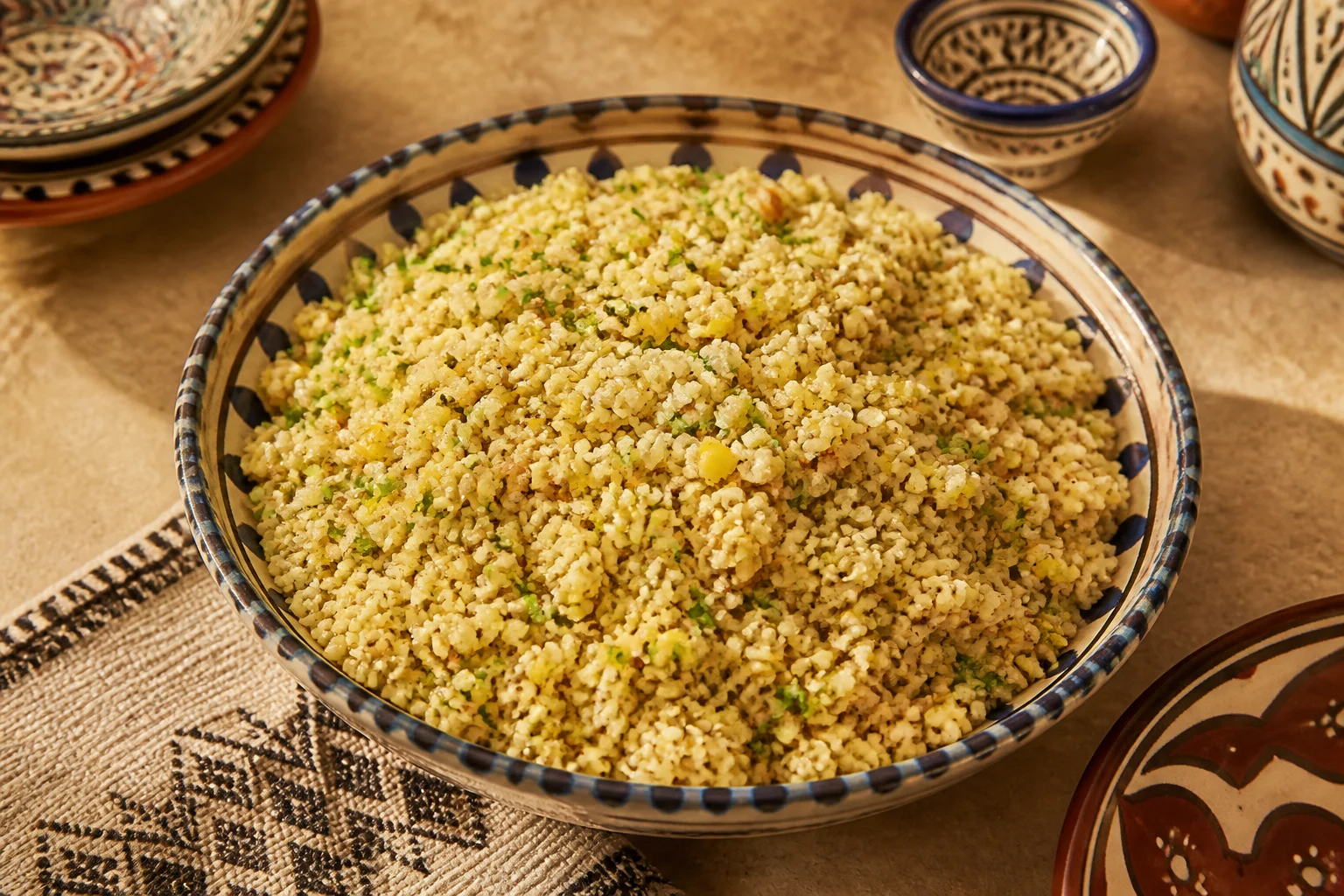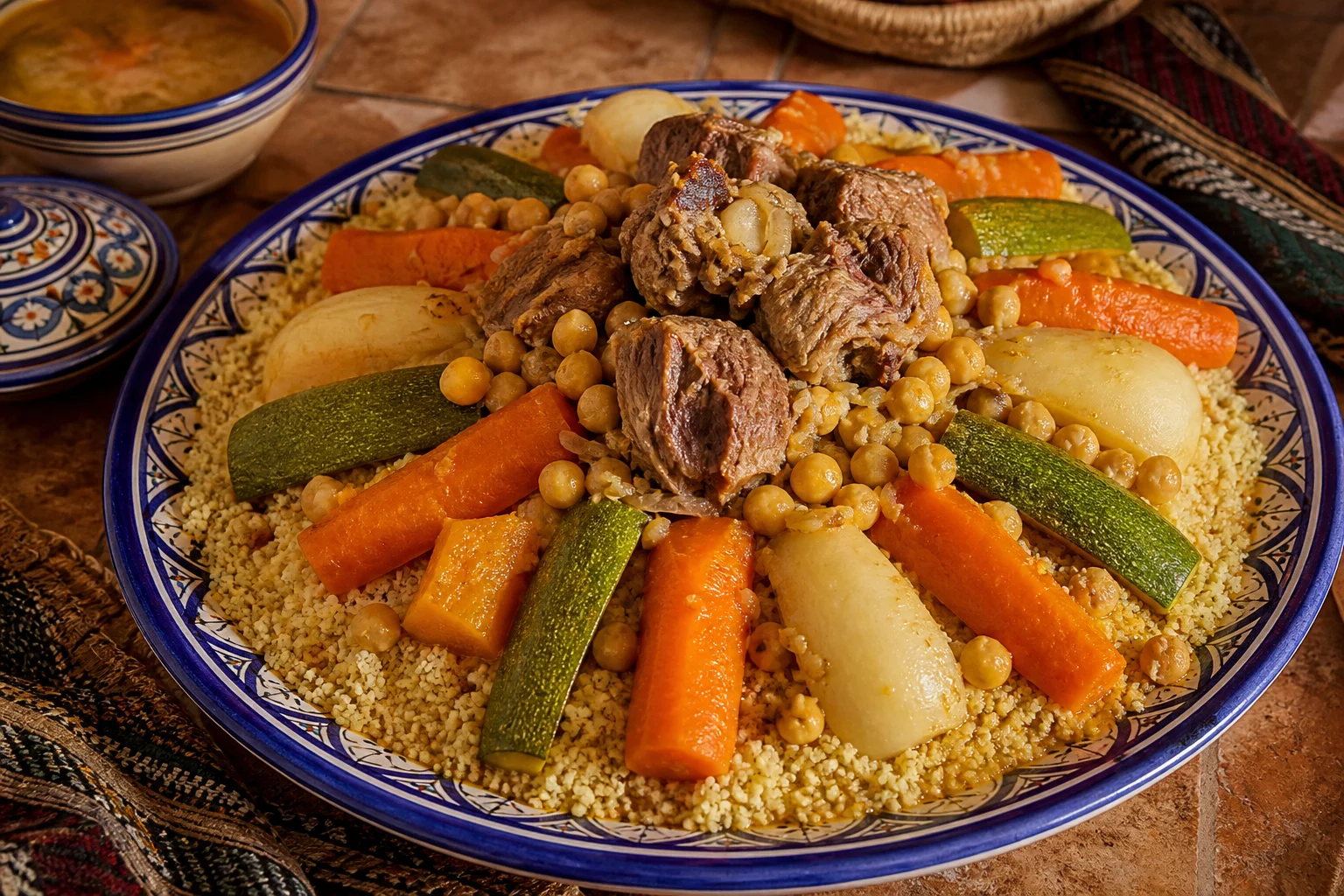
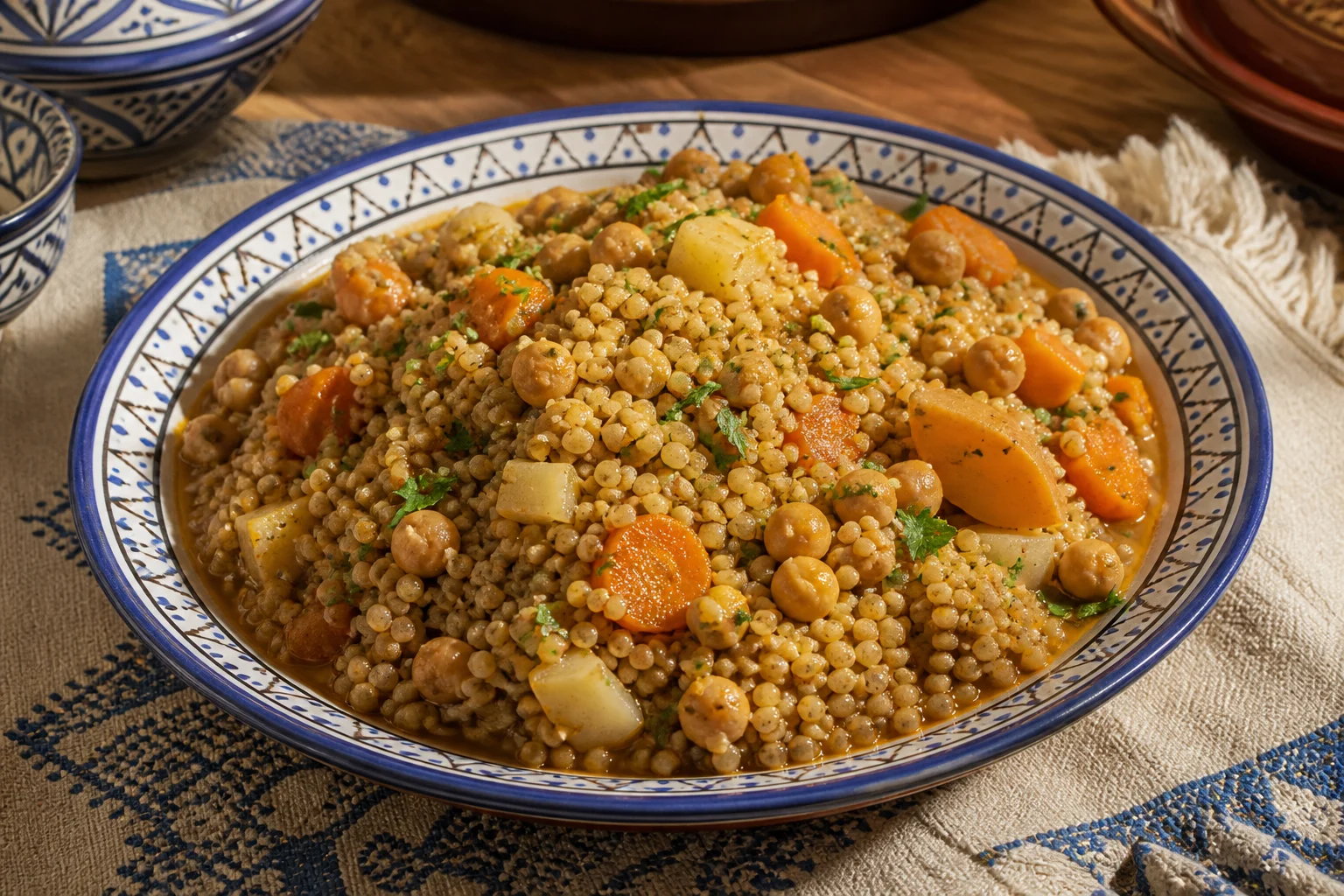
A mountain recipe to pass on
Barley has a more earthy flavor than wheat and is reminiscent of simple meals in rural and mountainous areas of Morocco. This version has been rewritten and structured for contemporary family cooking, while retaining the products, proportions and gestures that give the dish its identity. Its slightly brown grain, its richness in fiber and its clean chew make for a particularly satisfying couscous. It takes a few minutes to set up: weigh the cereals, prepare the vegetables and gather the spices before starting. The process thus becomes smoother and cooking remains easy to control.
The gestures that build flavor
Roll without pressing, with a loose circular motion, then sift often so that the large grains do not capture all the moisture. Respect the resting times and especially observe the texture: a cereal must remain distinct, a dough must become supple without being worked roughly, and a broth must simmer rather than boil violently. Taste at several stages, then gradually adjust the salt, acidity or spices. This attention gives a more regular result than simply following the timer and allows the recipe to be adapted to the power of the fire or the size of the ingredients.
Service, balance and conservation
Accompany it with a root vegetable broth, chickpeas and a drizzle of fruity olive oil. The quantities indicated can be adjusted with the portion selector on the sheet, maintaining the same proportions. Calories and nutritional values are estimates per serving: they vary depending on the product, the amount of fat actually absorbed and the service. Dry couscous is kept cool in a closed jar; cooked, keep it in the refrigerator for two days and reheat it with steam. Serve the dish in simple and generous dishes, so that its colors, grains and garnishes remain the center of attention.
Source and credits: recipe adapted from Traditional Mountain Recipes Cookbook - More than 50 recipes from Morocco, Algeria, Italy, Croatia, Tunisia and Lebanon (2025), MountainHER project, by Josipa Liker and Leopold Jurković, under the editorial direction of Filippo Bassi and Rachid Mrabet. Rewritten text, nutritional structuring, editorial verification and original photography: My Delice Recipes.