Traditional Algerian couscous: lamb and vegetables at the heart of sharing
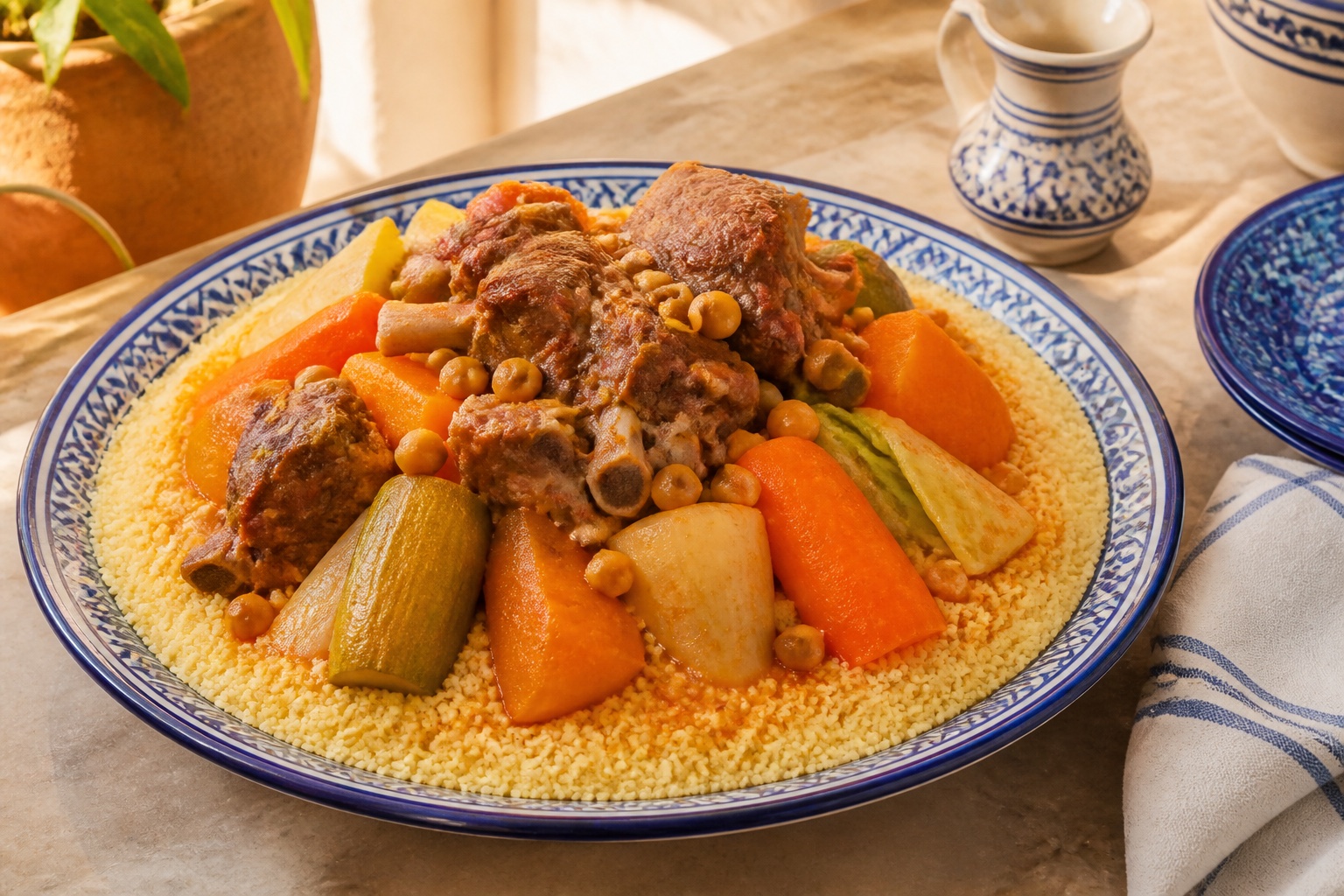
The Algerian couscous is much more than a complete dish: it accompanies Fridays with the family, celebrations and large tables. In this lamb version, steamed semolina grains accommodate tender meat, chickpeas and seven vegetables chosen for their complementary textures. The slightly red broth, flavored with ras el-hanout and a hint of cinnamon, must remain aromatic without masking the taste of the vegetables.
Around the Mediterranean basin, couscous tells a story of cereals, transmitted gestures and hospitality. Algeria, Morocco, Tunisia and Mauritania brought together the knowledge linked to its preparation, registered in 2020 in the UNESCO intangible cultural heritage. Rolling the semolina, aerating it then steaming it several times remains the gesture that produces light and perfectly separated grains.
The success of this lamb couscous depends on the cooking rate. The meat and chickpeas start in the broth, the firm vegetables follow, then the zucchini and pumpkin are added later so they hold their shape. The semolina gradually absorbs the aromas of the steam without becoming damp or compact.
Serve the couscous in a large dish, the lamb in the center and the vegetables arranged harmoniously around it. Present the broth separately so that everyone can help themselves according to their taste. A glass of leben, a few roasted peppers or a small cup of harissa can complete this family Algerian dish.
Ingredients for 8 people
- 600 g Medium non-precooked couscous
- 800 g Lamb with bone — shoulder or collar in pieces
- 250 g Cooked chickpeas
- 2 Onion
- 400 g Ripe tomato — grated
- 30 g Tomato paste
- 4 Carrot — peeled and cut in half
- 2 Turnip — cut into quarters
- 3 Zucchini — cut into large pieces
- 400 g Pumpkin — cut into large pieces
- 300 g Cabbage — in quarters
- 3 Potato — peeled and cut in half
- 45 ml Olive oil
- 40 g Smen or butter
- 1 tsp Ras el-hanout
- 1 tsp Sweet paprika
- 0.5 tsp Ground cinnamon
- 12 g Fine salt — to adjust
- 0.5 tsp Black pepper — ground
- 2000 ml Hot water
The keys to successful Algerian couscous
- Air semolina: moisten it gradually and separate the grains between each steaming.
- Whole vegetables: add the most fragile ones last and remove them as soon as they are tender.
- Balanced broth: it must be generous, fragrant and slightly coating, never too fatty.
- Serving: water the dish moderately and offer the rest of the broth at the table.
Choose the right semolina and vegetables
For a result close to traditional family couscous, choose medium, non-precooked durum wheat semolina. Its grains are more resistant to successive passages in the couscous maker and absorb flavors without transforming into paste. Always moisten gradually: pour a little water, let it penetrate, then gently rub the grains between your palms. If small balls form, break them up before steaming. The butter or smen is only added at the end, when the semolina is cooked and still hot.
The seven vegetables are not a fixed rule. The idea is to combine firm vegetables, such as carrots, turnips and potatoes, with softer vegetables, such as zucchini and pumpkin. The cabbage gives character to the broth, while the chickpeas provide a creamy texture. When in season, you can add cardoons, broad beans or green beans. Cut the vegetables into large, regular pieces: this way they remain recognizable in the dish and stand up to cooking better.
Organization, variations and conservation
This couscous can be prepared without stress by proceeding in stages. The day before, soak the dried chickpeas and cut the meat. The same day, start the broth about two hours before the meal. While the lamb is simmering, take care of the semolina then add the vegetables according to their cooking time. Always keep a little hot water nearby to loosen the broth without stopping the boil.
For a lighter version, replace the lamb with free-range chicken. A vegetarian version also works with more chickpeas, beans and a concentrated vegetable broth. The next day, store the semolina, broth, meat and vegetables separately in airtight containers in the refrigerator. Reheat the semolina by steam or in the microwave with a few drops of water, and bring the broth to a gentle simmer.
Frequently asked questions
Why does couscous become compact? It has generally received too much water in one go or has not been sufficiently aerated. Can we use instant semolina? Yes to save time, but the texture will be less light and less fragrant than with steam cooking. How to measure the broth? Start by watering the dish moderately: everyone can then add some at the table.